|
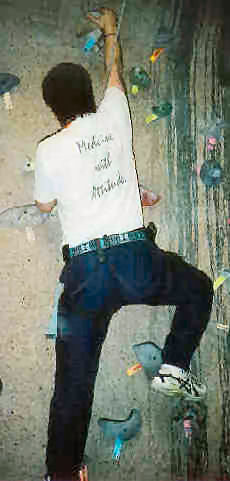
Sports medicine is probably best defined as medicine in motion, a term
coined by Dr. Doug McKeag in the early 1990's. After all, the
typical individual does not go through his/her life perched on top of a doctors’
examination table. Yet, this is how most physicians see their patients!
Sports medicine docs try to appreciate the human body for how it is in
reality - active.
Whether our patients are running marathons or walking
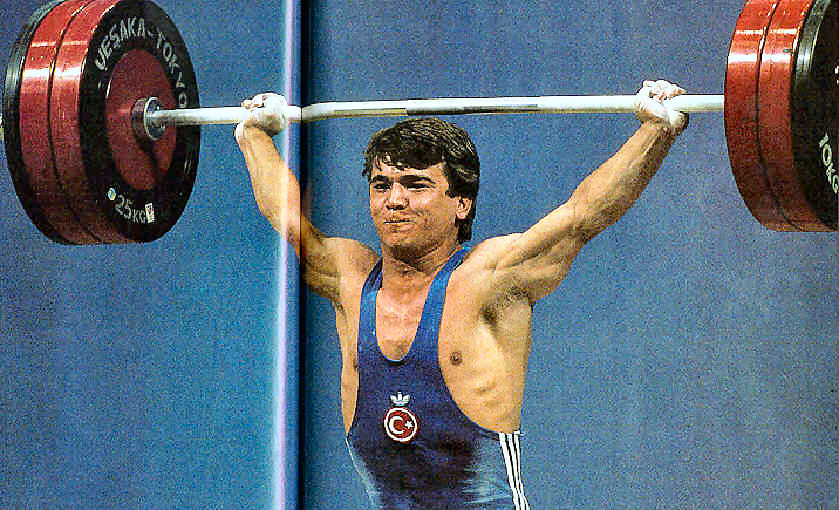
the local shopping malls, lifting heavy barbells or pots and pans. Because sport
docs tend to take a more aggressive approach to many conditions, particularly
with regards to the musculoskeletal system, some of us proudly describe what we
do as "medicine with attitude!"
|
|
(Is it some sort of Zen philosophy or
some long-forgotten geothermophysics thingy?)
Basically, "use it or lose it" sums it up. The Tin
Man in the Wizard of Oz would not have frozen in place had he kept moving. Thus, another reason why we try to keep our patients
(particularly our seniors) active!
|
|
This concept originated
somewhere in the late 1980's. Through it we apply the principles of
sports medicine to the evaluation and treatment of injured workers.
A lot of time and money has been spent evaluating athletes to discover
ways in which to help them perform better. They’ve been hooked up to all
sorts of machines monitoring their hearts and lungs, strength/endurance,
analyzing their diets and whatever supplements they might be taking, etc..
Of course, this is all done with the best of intentions…….utilizing
this information, the best athletes may look forward to winning Olympic
gold. (Or perhaps lucrative careers earning obscenely high salaries,
not to mention millions of dollars endorsing various advertising
products...but I digress.)
Fortunately, the information gleaned from the athletic studies can
easily be applied to the American work force.
Treating
these workers as "industrial athletes offers several advantages:
FIRST
-faster return to participation: the typical
athlete wants to get right back into the game ASAP. They generally won’t
stand for a doctor who tells them to "stay in bed for 3 weeks so that
back can heal." Furthermore, we know that activity promotes more
rapid healing and restoration of performance. [And, while the "Michael Jordans"
of the world probably wouldn’t miss a few weeks of
income, not many of us regular folks can go too long, as a result of an
injury, without a full paycheck.]
SECOND
-self-esteem is improved: the sports medicine team
serves as cheerleaders in a sense. We psych up our athletes every step of
the way through their recovery, filling them with positive reinforcement.
We do the same for our industrial athletes. ["Doc says he’s
treating me just like Joe Montana!" In San Diego: cómo Péle!]
FINALLY
-Team physicians are important. Not only does a
good team doc cover events, but we truly become a part of the team. We
know our players and coaches. We understand the personality dynamics around
the workplace, as well, and how this may affect a worker’s recovery. [It’s
well-recognized that an employee who likes their job will return to work
faster than one who does not! Also, if the employees feel comfortable with
us, they may start to trust us with such things as the truth of how or
when an injury really occurred.]
|
|
|
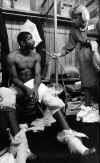
| Monday
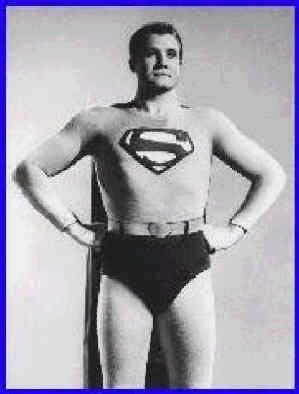
through Friday, our "desk jockeys" behave as mere mortals. |
 |
| Come Saturday, watch out! |
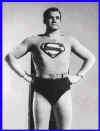 |
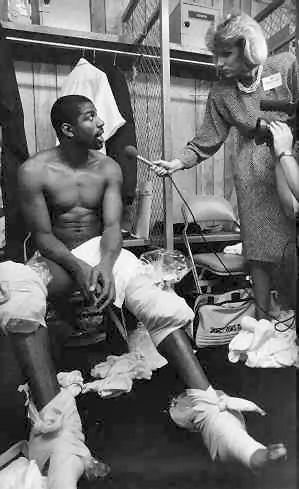
| Sunday evening: paying the price... |
 |
|
|
Web Pages That Suck
(by Flanders and Willis) was used to gain understanding for the basics
of web design. After I planned out the site, I used Microsoft
FrontPage 2000 to assist with the coding. No
"canned" themes were used in the creation of this site.
Buttons were created using Microsoft Image
Composer (part of MS FrontPage 2000), with clipart from Microsoft
Publisher. The web site had been hosted by Hostway until March 2021 when we moved to GoDaddy for internet cybersecurity reasons.
Currently, Adobe Dreamweaver is used to update the site.
|
|
We often field requests for referrals to
specialists, e.g. dermatologists to look at acne or remove a skin
cancer.
First, it is important to understand that family
medicine is a specialty itself. The vast majority of family physicians
are capable of taking care of a wide range of medical and minor surgical
conditions without a need to refer out to a specialist.
Every physician should know his/her limitations.
I, for example, have not delivered a baby in over 15 years. I gladly
refer these cases to the local obstetricians. I do, however, perform
well-woman exams, so these do not have to be referred out unless a
patient truly prefers a particular gynecologist.
We have the capability to perform minor office
surgical procedures such as biopsies and excisions of many skin lesions,
as well as cryosurgery ("freezing" of pre-malignant and other
benign skin lesions). We treat most types of common dermatitis and other
skin conditions, as well. However, should a patient not observe
appropriate improvement with my treatment, I would not hesitate to make
a referral to one of our fine local dermatologists. These are but
just a few common examples.
We do not make any
referral decisions based upon insurance type or lack thereof! We simply try to do "what is the right thing" for our patient.
If a specialty opinion is appropriate, I will make an appropriate
referral regardless of coverage. When I ws part of the managed care system, I would never consider withholding or
delaying a referral simply because someone had HMO coverage (this would
be stupid, as well as unethical).
Incidentally, I always try to send my patients to those
physicians to whom I would send my own family members. Be aware, though,
that insurance plans have their own preferred panels from whom you must choose, should you decide to remain "in network." |
|
|
|
Preferred Provider Organization (PPO) plans
provide freedom of choice with regards to your medical care. The costs
of these plans has risen steadily over the years. In response to this
fact, Health Maintenance Organizations (HMO) were created as an
attempt to keep health care affordable for the average family. It
accomplished this task, primarily through containment of costs and
limiting panels of physicians.
A former associate of mine offered this excellent
analogy:
Suppose that you want to go the shopping mall.
You have two options to get there from your home: you may drive directly
or take public transportation.
If you drive directly, you pay for the costs of
your vehicle, the fuel, maintenance and upkeep, but you have the freedom
to travel at the time of your choosing, as well as the route. (PPO)
Public transportation, on the other hand, will
still get you to the mall. The monetary cost of the trip will be
cheaper, however, it might not be as convenient - you might have to walk
a few blocks/miles to the bus stop and the bus may have to make several
stops along a long circuitous route, but eventually you will find
yourself at the mall. (HMO)
With a PPO plan, you can usually choose the
physicians that you like without need of a long referral process, so you
can be seen faster in many cases. With the typical HMO plan, your choice
of physicians within a particular community will be limited. It's quite
possible that the best docs in the community might not even belong to
the HMO.
In short, we get what we pay for. Convenience
and quality has it's price.
[By the way, another term - IPA -
frequently comes up in these discussions. IPA stands for Independent
Physician Association. This is a contracting organization that
serves as the go-between for practicing physicians and individual
insurance companies. For example, Sharp Community Medical Group (SCMG)
contracts with several HMO insurance companies (e.g. Secure Horizons,
HealthNet) upon the behalf of practicing physicians.] |
|
|
|
Of course not! We recognize that some patients
might not be in the mood, nor have the time, to be entertained during
their visit. Simply tell the medical assistant that you'd like to
politely decline any magic/joking/clowning at the time of your visit and
we'll respect your wishes.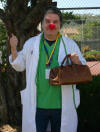
That being said, Dr. Pearson's philosophy closely
correlates with that of Dr. Patch
Adams' Gezundheit Institute. Most people do not like to go to
the doctor's office. Good studies have documented the stresses and shame
that is often associated with admitting a weakness (e.g. illness),
especially men. After all, John Wayne wouldn't have gone to a doctor. He
would have chomped on a silver bullet instead!
It's been oft quoted that "Laughter is the best
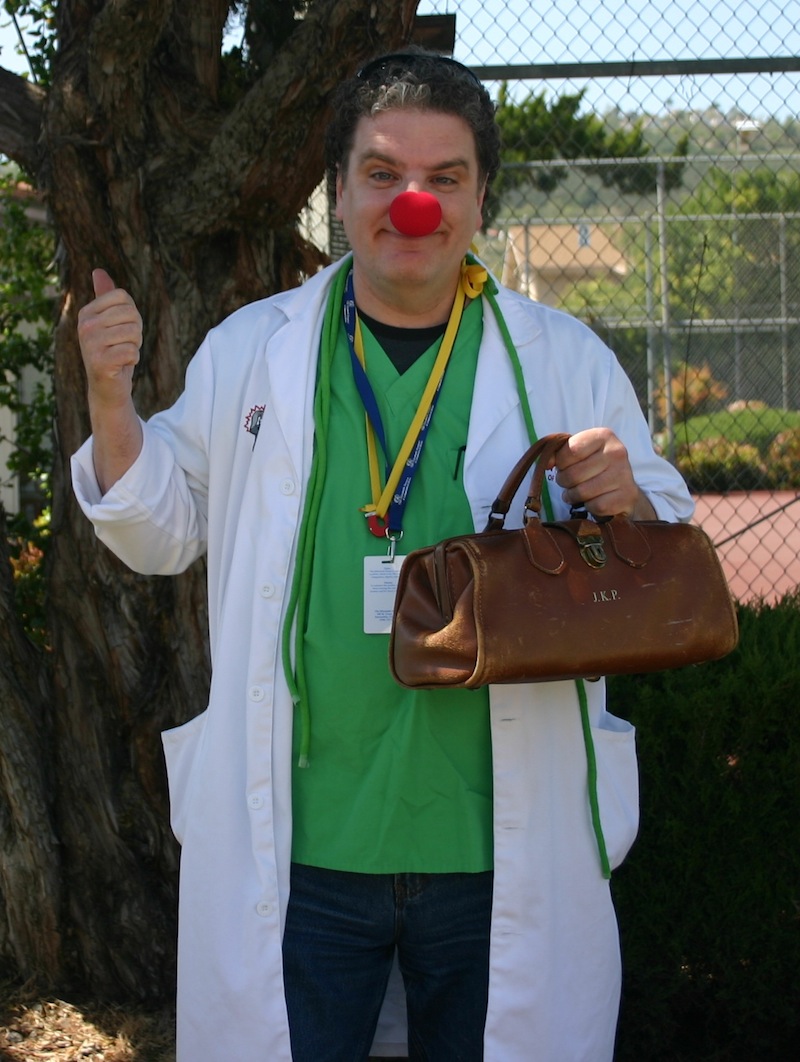
medicine." Dr. Pearson uses humor in the form of jokes, improv,
clowning, magic, etc to relax his patients and help them to forget that
they're visiting a doctor. He is definitely NOT the stereotypical
physician wearing a suit/tie who spends just 8 minutes with each
patient. Rather, he cares enough to try and make his patients feel
better spiritually, as well. Things can get silly at times (no matter
what your age!) and you probably won't find worse puns than this
office, but he really does listen to what patients tell him and the vast
majority appreciate his efforts and feel better afterwards.
[All in all, this practice is probably not a good one for patients
without a sense of humor. There are plenty of other good docs in the
area from whom to choose and we make appropriate recommendations if
requested.] |
|
|
I believe in sex, drugs and rock and roll - will you talk “dirty” to me?
Sorry, but… no.
This question deserves some elaboration because they're a part of many lives and a lot of physicians do not feel comfortable discussing these topics (well, maybe they’ll talk about rock ’n roll…)
While I do not talk “dirty” to anyone, sex is discussed in a frank manner when appropriate. My personal take is that discussions about sex should be treated like the weather i.e. not a big deal. It’s just a part of life and nothing to get hung up about.
I do a fair amount of counseling where discussions about sexual activity are important e.g. hormone deficiencies in men and women. Mismatched libidos between partners, pain with sexual activity, male erectile/ejaculatory problems, female anorgasmia, and certain genitourinary tract infections are common conditions seen in a primary care medical practice where frank discussions are necessary. Besides the standard medical textbook explanations, I’ll provide practical advice that might include a discussion of lubes and/or toys. I’ve been providing sexual counseling for many years and my patients have told me time and time again how they appreciate my honesty and how easy it is to discuss these subjects in our office. [Providing guidance about sex is not talking “dirty”, but if your religious upbringing has taught you otherwise and you do not feel comfortable discussing these topics, then please tell me and do not feel embarrassed. My goal is to make sure that my patients get educated and are comfortable with the discussions.]
Regarding drugs: despite perceptions about us because we attend Burning Man, I do not do any illegal drugs. I am very familiar with cannabis (courtesy of college) and I’m open with my patients about being a legal personal grower (my product is given away to people with chronic pain or dying from cancer). I worked for a teen drug rehab center many years ago, as well, and in the upcoming months, I will be joining the Board of Editors for an offshoot of Patient Care magazine dealing strictly with medicinal cannabis, teaching physicians about the current science.
I feel that it’s important for patients to be able to trust the advice given to them by their physician. Knowing that I’ve been a grower places patients at ease and helps them to open up and be honest with me about their personal use. I’ve written articles on medicinal cannabis as I feel that patients should get medical information from a licensed physician and not a 21-year-old “budtender” at a local dispensary. [And, in case you’re wondering…no, we only provide INFORMATION about cannabis. We do NOT sell it to patients. I have this pesky hang-up about keeping my medical license! However, patients CAN obtain documentation from us for applications for the California State Medicinal Cannabis program that they can use to purchase products at local dispensaries.]
|
|
|
Click here!
|
|
|
|
|
|
Quite simply, a good doc does not order a test
unless it's going to change his/her treatment. While this might not
be such a big deal when ordering cheap tests (do these really exist?),
it becomes a significant issue when it comes to the more expensive
technologies such as magnetic resonance (MR) scanning (MRI scans may
easily exceed $1000).
There are numerous studies demonstrating the
extraordinary amounts of money wasted on unnecessary radiographic
examinations. For example, physicians in Ottawa, Canada, looked at the
vast numbers of plain x-rays that were ordered for typical
injuries to the knee, ankle, and foot. They observed that while most
patients who arrive at emergency rooms with an ankle sprain are sent for
an X-ray, less than 15% actually have a fracture. These physicians
developed the Ottawa Ankle Rules, a set of guidelines that can
help doctors avoid ordering unnecessary X-rays simply by observing how
patients walk and by feeling their feet. These rules were recently
validated, yet again, by a
Swiss study that concluded that they "can rule out
ankle fractures with almost 100% accuracy and cut down on thousands
of needless X-rays every year." As a sports med doc, I've used
these rules over the years and have yet to miss a clinically significant
fracture.
There are occasions where the diagnosis of a
fracture simply doesn't make any difference in the subsequent treatment.
Fractures of the toes and ribs are probably the most common examples of
these. All common toe injuries are treated by "buddy taping"
the affected toe to the adjacent one, whether a sprain or simple
fracture. In the case of ribs, they are composed of bone and cartilage,
the latter of which cannot be visualized with routine x-rays. Rib
studies are notorious for missing rib fractures. For example, I cared
for a patient involved in a motor vehicle accident who complained of
left rib and flank pain. Plain films obtained by the emergency room
physician were interpreted as being negative for fracture. When I saw
him, I was concerned for a possible spleen injury so I ordered a CT scan
of the region which revealed the presence of 7 broken/fractured
ribs! Regarding their treatment, we do not apply casts to chests
for rib fractures as this would compromise breathing (we even try to
avoid rib belts, if possible, for this reason). Hence, painful ribs are
treated with analgesics ("pain killers"), ice and then heat,
etc - whether they are broken or merely contused (bruised). Bottom line:
no need for rib x-rays unless we clinically suspect a more severe injury
such as a pneumothorax (and then the radiographic study of choice is a
chest x-ray looking at the lungs, rather than a rib series).
I could go on forever on the subject of
imaging the acute (fresh/new) low back injury. The fact is that out of
100 back injuries, less than 5 will ever require surgery, including many
disc herniations. Plain x-rays cannot visualize muscles, discs, nerves,
or ligaments, nor can they identify facet subluxations (the
"kinks" that patients commonly present with in the office). MR
imaging can identify the majority of disc herniations/protrusions, but
we would only order MR examinations if surgery was being considered
because, as just noted, the majority of patients with acute disc
injuries get better without surgery. The natural course of acute
low back pain is well-recognized, as are the treatment options. Early
imaging studies do not add anything to the management of the typical
case of acute low back pain. Of course, exceptions may exist and there
are some "red flags" in the patient's history that we look for in order
to identify who might really have an underlying condition warranting
further investigation. The National Guideline Clearinghouse (U.S.
Government) has published it's guidelines for the
evaluation/management of low back pain or sciatica in the primary care
setting. (They may be found
here.) Finally, a brief summary of the treatment of low back pain may also be
found at the Quackwatch site here.
[And don't forget to read my patient education handout on the treatment
of acute injuries elsewhere
on this site!]
Oh yeah, could we use
the money? Sure, but we have to live with ourselves ethically and do
what's right for our patients. Bummer.....
|
|
|
Important information for students
Word on the street is that some students actually enjoy (and perhaps even learn some things) during their rotations with us. While that's news to us, here's what we CAN tell you:
Dr. Pearson has been training students and residents for over 35 years, averaging 8-10/year. Student who rotate with us come from several disciplines: medical students (D.O./Osteopathic and M.D./Allopathic), Nurse Practitioners, and Physician Assistants. They come from colleges and universities across the nation including several of the Osteopathic colleges, UCSD, Stanford, George Washington University, and many others.
You will NOT learn medicine here. OK, you probably will anyway, but the real strength of the rotation is how to be real i.e. be human and be able to communicate with patients, whilst at the same time putting them at ease. (There's an ever so slight chance that you may learn a bit about magic, improv, and clowning, as well.)
For the record, I do not "pimp" students with questions and I only give out one homework assignment: reading the very first of the short Sherlock Holmes stories by Sir Arthur Conan Doyle, and a brief essay about the medical influences on the stories. [Click on the hyperlinks to download them]
Finally, Laurie has put together a list of things that you need to know before you arrive for your rotation. Please download this and review in advance. |
| |
|